Watching Duchamp and Man Ray's Anemic Cinema, I enjoyed the relationship between the spiral swirls and the cryptic spinning discus. Well, perhaps there is no direct relationship - a diptych reading of the film - but I found that they each separately invited an automatistic delving on the viewer's part past the mere geometric and linguistic syntagma on screen. As Le Grice discusses, the spiral image is actually not composed of spirals, but concentric and eccentric circles. However, despite my best knowledge that I was watching circles, I felt a hypnotic physiological response - seeing single lines twirl and gyrate - in a dimension beyond the flat image. In this way, Anemic Cinema entices a kind of "psychic automatism" (Baldwin) that Man Ray and the Surrealists (giving proper distinction between the two.) It is not orthodox Surrealism that explores unconscious association of images and created dreamscapes, but rather, an abstract piece of art photographed on film that tempts the mind to find pattern and order - the automatism of the computing mind to find order. Likewise, the viewer's mind begs for understanding when reading the asynchronous juxtaposition of words. The 'nonsensical' grouping of words could be read as Dadaist - resistant towards sense and convention. However, contrasted against the 3-D venture of the spiral sequences, these cryptic linguistic invitations seemed to me also experiments in automatism. My main take-away from Duchamp's use of language was that departure from aesthetic normalcy invites thought, reconsideration. Le Grice cites this as the longstanding impact of Dada - the deconstructive force of anti-art prompting artists to consider innovation - construction from destruction.
Monday, September 28, 2015

Sunday, September 20, 2015
The Empire Strikes Back
Overall, I enjoyed the presentation of Eisenstein's Strike. The film presented many iconic shots, such as the proletariat deluge and the factory shots glorifying the aesthetics of modernized mechanization. There was a small handful of cinematic tricks or spectacles, such as the superimposition of animal faces over those of the activists. I found the frenzied kinetics of Eisenstein's editing, especially during scenes of oceanic entropy involving mass frenzy of the workers. I thought the soundtrack followed the film thematically was really interesting - but I didn't hold it to the same authenticity.
As you had forewarned, the film definitely tested my patience and endurance. I think that the energy chart of a work strike would begin with dormancy prior to revolt, the rush and euphoria of the actual rebellion, followed by the struggle against poverty once on strike. I think the film reflects this model quite closely. It's beginning, after the initial mechanical spectacle, is scatterbrained - the plot directionless as the film follows the different activists (The Owl, etc.) These individuals do not compete spectacle-wise with the power of the factory. However, it is upon the suicide of a single factory worker (death to the individual) that the collective is formed. This sight of unified masses was an awesome sight. It was hugely entertaining - on a production level, the sheer number of actors and extras is amazing! The anti-spatial editing of the frenzy, precursor to the Odessa Steps fever surge, is didactically enthralling, fantastical propaganda, subversive and spectacular. The aftermath, however, sucks, testing your stamina through narrative molasses. As the workers grew weary, so did I. I became fatigued and bought whatever surreal delirious dreams were thrown at me in Part 5. The murder of the Bull was, of course, physically hard to watch - any on-screen snuff is, even after having watched Cannibal Holocaust the same week.
The Vertov reading to me was very modernistic, advocating for aesthetics of "radical necessity, rhythm, and speed" and the modeling of mankind after machine, Vertov framed the individual as heavily flawed when compared to the machine. Strike likened the masses to that of a machine. The only sight more awesome than the factory mechanics was the collective proletariat beast hijacking it. Also, Eisenstein's support of rapid editing and montage, a pioneering of art technology, shares Vertovs celebration of movement through machine.
In the Reese reading, there was a section referencing Eisenstein that discussed the pattern in The Avant-Garde of "innovation, consolidation, reaction." The pattern occurs quite literally in Strike: the triumphs of industrialization kicking-off the film, the merge of the proletariat mass, and their subsequent revolt.
Much of our class discussion of Strike has been whether or not the film follows-up on Eisenstein's famous theories of Dialectical Montage. I think that there is very interesting dissonant space between the different tectonic plates in film's narrative. The depthlessness of introducing various individual activists versus the clear narrative direction of united workers, for example. Also, there is a scene after all the activists are introduced in which the activists see a spy while at the docks. The anti-spatial, discontinuity editing of this scene demonstrates the absence of harmony as a result of individualism. In comparing different sections of the film, I find that, whatever synthesis can be extracted from their juxtaposition is a hazy paradigmatic nebula, and not easily defined. Eisenstein's notion of an ideogram, birthed from "copulative" hieroglyphs, is perhaps standing, but only in a macro sense. There are without a doubt many juxtapositions antithetical forces, but the opposed forces are quite massive, and the fourth-dimensional space between them even more massive. Srtike could be somewhat of a haiku, a 6-line haiku-like cross-examination of dissonant forces.
As you had forewarned, the film definitely tested my patience and endurance. I think that the energy chart of a work strike would begin with dormancy prior to revolt, the rush and euphoria of the actual rebellion, followed by the struggle against poverty once on strike. I think the film reflects this model quite closely. It's beginning, after the initial mechanical spectacle, is scatterbrained - the plot directionless as the film follows the different activists (The Owl, etc.) These individuals do not compete spectacle-wise with the power of the factory. However, it is upon the suicide of a single factory worker (death to the individual) that the collective is formed. This sight of unified masses was an awesome sight. It was hugely entertaining - on a production level, the sheer number of actors and extras is amazing! The anti-spatial editing of the frenzy, precursor to the Odessa Steps fever surge, is didactically enthralling, fantastical propaganda, subversive and spectacular. The aftermath, however, sucks, testing your stamina through narrative molasses. As the workers grew weary, so did I. I became fatigued and bought whatever surreal delirious dreams were thrown at me in Part 5. The murder of the Bull was, of course, physically hard to watch - any on-screen snuff is, even after having watched Cannibal Holocaust the same week.
The Vertov reading to me was very modernistic, advocating for aesthetics of "radical necessity, rhythm, and speed" and the modeling of mankind after machine, Vertov framed the individual as heavily flawed when compared to the machine. Strike likened the masses to that of a machine. The only sight more awesome than the factory mechanics was the collective proletariat beast hijacking it. Also, Eisenstein's support of rapid editing and montage, a pioneering of art technology, shares Vertovs celebration of movement through machine.
In the Reese reading, there was a section referencing Eisenstein that discussed the pattern in The Avant-Garde of "innovation, consolidation, reaction." The pattern occurs quite literally in Strike: the triumphs of industrialization kicking-off the film, the merge of the proletariat mass, and their subsequent revolt.
Much of our class discussion of Strike has been whether or not the film follows-up on Eisenstein's famous theories of Dialectical Montage. I think that there is very interesting dissonant space between the different tectonic plates in film's narrative. The depthlessness of introducing various individual activists versus the clear narrative direction of united workers, for example. Also, there is a scene after all the activists are introduced in which the activists see a spy while at the docks. The anti-spatial, discontinuity editing of this scene demonstrates the absence of harmony as a result of individualism. In comparing different sections of the film, I find that, whatever synthesis can be extracted from their juxtaposition is a hazy paradigmatic nebula, and not easily defined. Eisenstein's notion of an ideogram, birthed from "copulative" hieroglyphs, is perhaps standing, but only in a macro sense. There are without a doubt many juxtapositions antithetical forces, but the opposed forces are quite massive, and the fourth-dimensional space between them even more massive. Srtike could be somewhat of a haiku, a 6-line haiku-like cross-examination of dissonant forces.
Sunday, September 13, 2015
Dream of a Rarebit Fiend and Cinema of Attraction
Much like that enjoyed by its fateful glutton in the opening scene, Dream
of the Rarebit Fiend offers viewers a plentiful cornucopia, full of camera
trickery and spectacular attraction. I enjoyed Porter's use of intoxicating
visual effects, beginning once the fiend hits the street after his binge. The
superimposition of an oscillating pendulum over dizzying handheld street
footage provides an entertaining exhibition of a wino's futile grapple with
steady footing. This shot had a visceral effect on me, its sloppy and desperate
image a relatable state allegorical to drunkenness. However, Rarebit Fiend does
not limit itself to displaying imagery that pertains to the physiology of
inebriation, but provides a drinker's folly as a springboard for increasing
spectacle. After the initial discombobulating swirl scene, I no longer
felt physically joined with the suffering of the fiend, but instead enjoyed the
effects presented in the name of drunkenness. I liked the stop-motion entropy
of the fiend's bedroom furniture as it flies out of frame. In a miniature
re-creation of his bedroom (which I thought looked impressively similar) the
fiends bed spirals chaotically with he use of strings. I found comic
entertainment in the matting effect of little devils spurting from a rarebit
dish and bludgeoning the fiend's bed-ridden head. However, the increasing
formal nature of these effects caused me to lessen my identification with the
fiend (unless you want to read them as hallucinations - though unless in a case
of delirium tremens or a wormwood absinthe, I wouldn't associate visual
hallucinations with the psychological effects of alcohol :D). Instead, I felt
like a spectator, deriving pleasure from the spectacle of the fiend's
suffering, and unconcerned as to whether a drunk would actually experience the
effects shown on screen. I really enjoyed the matting of the fiend in bed, the
upper third of the screen, over a pan across a cityscape, the lower
two-thirds. This effect seemed the least physiological of all, but the most
fantastical.
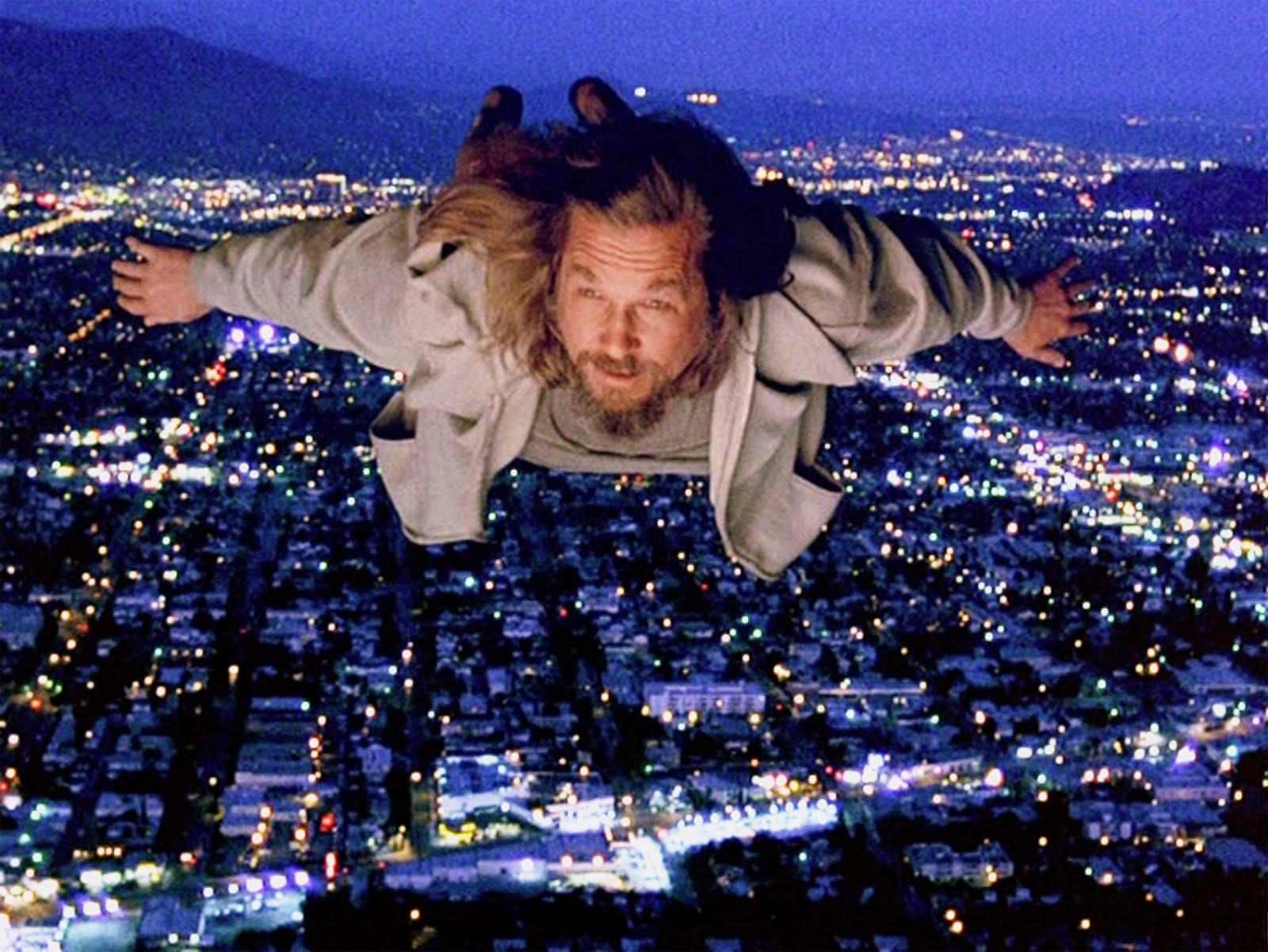
As Gunning identifies as a practice for early films in The Cinema of Attraction, the loose plotline, I feel, is but a frame or underscore onto which the film’s technical wizardry is projected. This is similar to the ‘narratives’ in Méliès films, which he describes as a “pretext” for cinematic tricks and dazzle. During the pendulum statue shot Rarebit Fiend, I felt a visceral response and sympathy to the fiend character – a reaction much sought by Eisenstein – the “psychological impact” of cinema. However, as Gunning relates, the formalist, FX-driven nature of the film – as well as its thin narrative – provided me with entertainment but in so doing prevented me from being consumed into the reality of the film itself – "exhibitionist confrontation rather than diegetic absorption," as he puts it.
As Gunning identifies as a practice for early films in The Cinema of Attraction, the loose plotline, I feel, is but a frame or underscore onto which the film’s technical wizardry is projected. This is similar to the ‘narratives’ in Méliès films, which he describes as a “pretext” for cinematic tricks and dazzle. During the pendulum statue shot Rarebit Fiend, I felt a visceral response and sympathy to the fiend character – a reaction much sought by Eisenstein – the “psychological impact” of cinema. However, as Gunning relates, the formalist, FX-driven nature of the film – as well as its thin narrative – provided me with entertainment but in so doing prevented me from being consumed into the reality of the film itself – "exhibitionist confrontation rather than diegetic absorption," as he puts it.
Subscribe to:
Posts (Atom)